There ’s a reason why " history " rhyme with " mystery . "
One of history’s biggest questions is: “How does an entire civilization disappear?” One can comprehend how an object or even a city is lost, buried, or destroyed, but an entire group or nation of people is nearly unfathomable. And if archaeology hadn’t emerged in the 18th century, many of these civilizations would have become permanently lost to time…
Even though archaeological and scientific tools have discovered much about these ancient civilizations, including facts about their daily lives, religions, and habits, many “disappearances” remain unsolved. From the Mayans to the Mississippians — here are 10 ancient societies that seemingly vanished from the face of the earth:
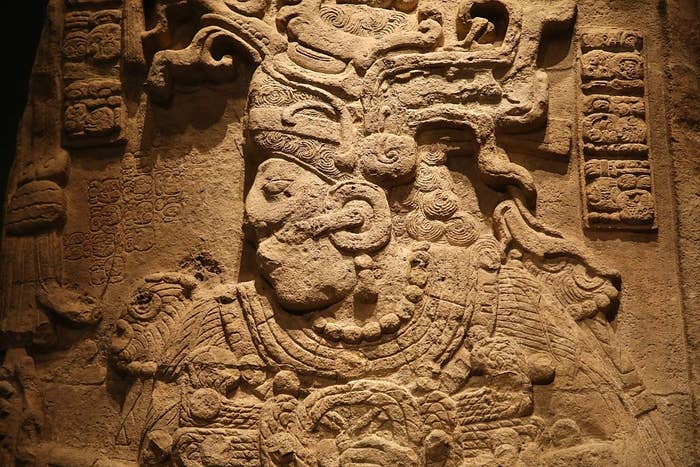
1.The Mayans:
Through the years, scientists and historians have come up with many plausible (and implausible)theories, ranging from climate change and war to, yes,alien abduction. However, they are still unable to pinpoint the exact cause of the civilization’s collapse, but note that it didn’t happen all at once, but rather occurred over an estimated 100-year period.
Even after the fall of their society , the Mayan people did n’t vanish entirely . or else , other cities such as Chichen Itza and later Mayapan in the northerly lowlands rose to prominence ( townsfolk were also established in the highlands ) .
However , thing dramatically agitate after Spanish conquistador bring in the other 1500s . By 1697 , Nojpeten , the last independent Mayan city , fell , and the civilisation was for the most part forgotten until the 1830s , when archaeologists set about excavating the areas in which the Mayans lived .
2.Easter Island’s Inhabitants (aka the Rapa Nui):
However, in 2024, Columbia archaeologist Dylan Davis released astudychallenging the long-held narrative, showing that the Rapa Nui didn’t overpopulate the island but maintained a stable environment until the arrival of European settlers in the early 18th century. Davis and his team’s comprehensive study of the island’s farmland revealed that the residents only grew enough crops to feed four thousand individuals at any given time. He explained, “This shows that the population could never have been as big as some of the earlier estimates suggested.”
The Rapa Nui had a particular method of agriculture called " rock gardening , " where farmers would scatter low rocks in fields to protect the budding plants from the element . For many old age , scientist simply mapped these " garden " to cipher the yield of the ancient islander ' crops . However , Davis and his squad carry on different research using artificial satellite mental imagery ; their findings revealed that " There are innate rock outcrops all over the piazza that had been misidentified as rock garden in the past tense . "
This written report , in marrow , confute the possibility that the Rapa Nui were frivolous multitude , as Davis ’s field pointed out that the Rapa Nui ’s " rock ‘n’ roll gardening " was an extremely efficient room to get necessary minerals and nutrients out from Easter Island ’s alimentary - deficient volcanic soil .
" The deterrent example is the opposite of the flop theory,”says Davis . “ People were able to be very resilient in the typeface of limited resources by modifying the environs in a mode that facilitate . "